
documenting a working farm
one of the most common things farmers say when photography comes up is simple.
“our place isn’t very photogenic.”
or sometimes:
“it’s just a working farm.”
the assumption is that photographs need tidy spaces, styled rooms or carefully planned moments. but farms rarely work like that, and they do not need to.
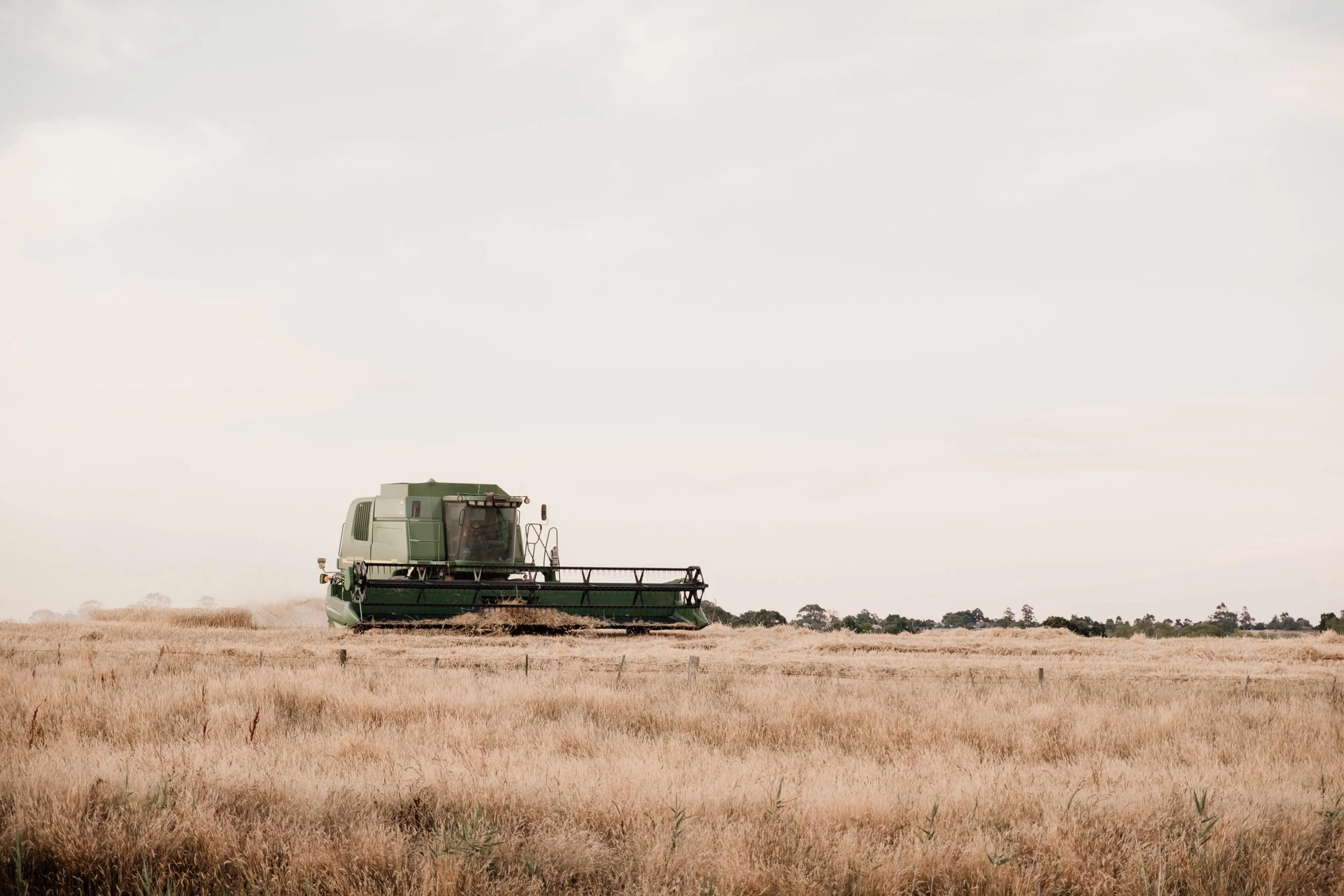
working farms already contain everything needed to tell a meaningful story. the landscape, the fences, the sheds, the machinery waiting in a paddock, the rhythm of planting and harvest. these are not background details — they are the work itself.
when photography is approached in a documentary way, the goal is not to stage something new. it is to observe what already exists.
that might look like tractors lined along the edge of a field during harvest, rows of grain shifting colour as the season moves forward, tools resting beside a shed door, or the quiet order of a property that has been worked for generations.
people rarely need to pose for these photographs. often the strongest images show hands at work, movement through a space, or the small details that reveal how a farm actually functions day to day.
this kind of imagery becomes useful in ways many farmers do not initially expect.
industry publications, agricultural organisations and regional features often need photographs that show the reality of farming life. having a small, thoughtful library of images makes it much easier to share your story when those opportunities appear.
the same images can also support creative work happening on farms.
many women across the northern midlands are quietly building creative businesses alongside farm life — baking, writing, painting, designing, preserving and documenting rural culture in their own way. the farm itself often becomes part of that story.
it is something i’ve also noticed in the work of women i follow online in new zealand, including philippa cameron of what’s for smoko, whose work brings together station life, food and storytelling, and gillian swinton, whose writing and business are shaped by homesteading, self-sufficiency and life on the land in central otago. both show how creative work and rural life can sit naturally side by side.
photography that documents the place honestly allows those stories to be shared more clearly.
it shows where the work happens — whether that is a studio in a shed, a workshop beside a paddock or a kitchen looking out across the property.
farms rarely need styling because the story already exists in the land, the structures and the people who move through them.
the role of photography is simply to notice it.
over time, these images become a visual record of the property itself. they show seasons changing, crops moving through the landscape and the everyday rhythm of work that shapes the farm year after year.
if you run a working farm in the northern midlands and have ever thought there is nothing particularly photogenic about it, that is usually not the case. some of the most compelling stories sit inside ordinary farm days — planting, harvesting, moving between sheds and paddocks. most of the time the photographs are already there. they simply need someone to pay attention to them.
if you would like to explore how photography might document your farm, your creative work or the wider story of your property, let’s organise a complimentary in-person visit. i’ll visit you and talk about what might be worth recording this season.
photography + words by samone bayles for rewild studio.